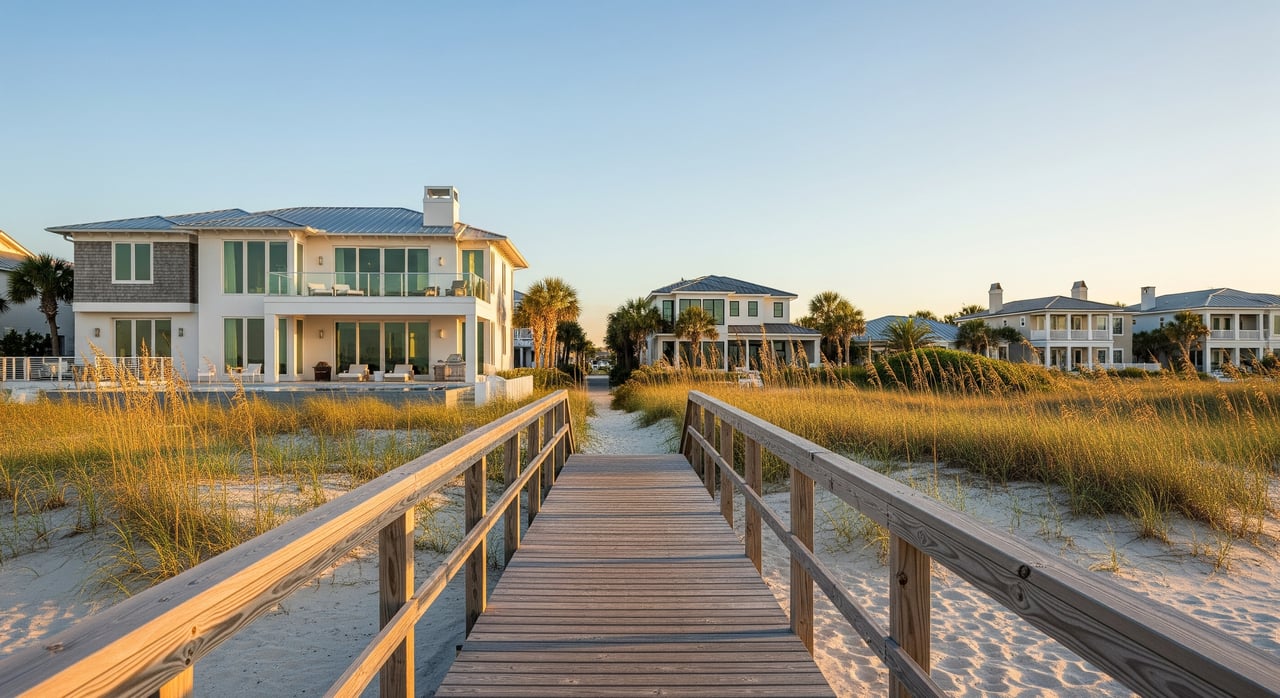
Should you pay for oceanfront or live a street or two back in Atlantic Beach or Neptune Beach? If you love the beach, this choice shapes your daily rhythm, your budget, and your long‑term plans. In this guide, you’ll compare lifestyle, access, insurance, maintenance, and resale trade‑offs so you can buy with clarity. Let’s dive in.
Local snapshot: Atlantic & Neptune Beach
Atlantic Beach and Neptune Beach sit side by side on a northeast Florida barrier island in Duval County. Both towns are primarily residential with local restaurants, shops, and parks, and offer short drives to Jacksonville. Homes range from classic cottages to newer elevated builds, with many narrow, linear lots typical of barrier islands.
Oceanfront lifestyle: what to expect
Access and views
- Immediate, unobstructed ocean views are the hallmark of oceanfront living.
- You often get private or semi‑private access to the sand from your lot.
- The sound of waves and direct sunrise exposure create a true beach‑at‑your‑doorstep feel.
Privacy and activity
- Expect more visibility and seasonal foot traffic near public beach access points and lifeguard zones.
- Beach events and peak‑season parking demand can affect privacy.
Walkability and amenities
- You are steps from the sand and close to beachside dining and activities.
- Everyday services may still be a short drive depending on the block.
Rental potential and rules
- Oceanfront homes often command higher short‑term rental rates.
- Both cities regulate rentals, licensing, and occupancy taxes. Confirm local ordinances and county requirements before counting on rental income.
Near‑ocean lifestyle: key benefits
Proximity without the premium
- You still enjoy a short 1–10 minute walk to the beach, depending on street layout.
- Some homes have deeded access paths or neighborhood crossings.
Quieter streets and parking
- Residential streets one or more blocks inland tend to be calmer with less transient foot traffic.
- Parking and local traffic are usually lighter than right on the sand.
Everyday convenience
- You may be closer to grocery stores and services that are set back from the beach.
- The neighborhood feel can be easier for year‑round living.
Rental considerations
- Near‑ocean rentals can perform well at a lower entry price and with lower operating costs.
- Always verify local rental rules, licensing, and taxes before marketing a property.
Cost and insurance realities
Purchase price and resale
- Oceanfront carries a meaningful price premium due to scarcity, views, and direct access.
- Near‑ocean typically attracts a broader buyer pool and can be easier to resell in some markets.
Flood zones and elevation
- Oceanfront lots are often in higher‑risk FEMA zones like V or VE with high‑velocity wave action.
- Near‑ocean homes may sit in AE or A zones with lower base flood elevations, though risk varies by exact elevation and distance from the shore.
- If a property is in a flood zone, request a FEMA Elevation Certificate to inform insurance and mitigation options.
Wind and homeowners insurance
- In coastal Florida, wind coverage, hurricane deductibles, and carrier availability matter.
- Insurers may require wind‑mitigation features. Get quotes early to understand cost and coverage.
Flood insurance specifics
- Flood insurance is mandatory with a mortgage in high‑risk zones and recommended in general.
- Premiums reflect zone, elevation, and FEMA’s Risk Rating 2.0 methodology. V/VE properties often face higher costs than homes farther inland.
Coastal construction and permits
- Building or modifying seaward of regulated lines, such as the Coastal Construction Control Line, involves added permitting and standards.
- Oceanfront V‑zone homes often require elevated foundations on pilings and engineered systems.
Maintenance on the coast
Materials and corrosion
- Salt spray accelerates corrosion of fasteners, fixtures, and metal components.
- Favor coastal‑grade materials like marine‑grade stainless, galvanized connectors, and fiber cement siding.
Roofing and exterior finishes
- Metal roofs are common for durability and wind performance when properly coated for salt exposure.
- Pay attention to window and door seals and hardware longevity.
Mechanical systems
- HVAC, pool equipment, and outdoor systems need more frequent service near the ocean.
- Select coastal packages and consider elevated mounting to reduce exposure.
Foundations and elevation
- Many oceanfront homes sit on pilings to meet V‑zone requirements and need specialized inspections.
- Near‑ocean homes may have slab or raised foundations with fewer exposure‑driven demands.
Landscaping and drainage
- Use coastal‑tolerant plants and maintain irrigation where appropriate.
- Ensure proper grading and stormwater management to avoid standing water after storms.
Seawalls, dunes, and shared systems
- Oceanfront parcels may depend on municipal or shared dune systems and, in some cases, private seawalls or revetments.
- Inspections and permits are often required for repairs or vegetation changes.
Beach management and assessments
- Many Florida beaches undergo periodic nourishment to combat erosion.
- Funding can include federal or state grants, local programs, or special taxing districts. Beachfront owners should ask about past or potential assessments.
Which choice fits your goals
Choose oceanfront if you value
- Direct beach access and unobstructed views.
- Stronger short‑term rental potential, subject to local rules.
- A premium lifestyle and are prepared for higher insurance, maintenance, and regulatory steps.
Choose near‑ocean if you value
- Lower purchase price with a short walk to the beach.
- Quieter streets and a broader resale market.
- Lower typical insurance and upkeep compared with the oceanfront edge.
Buyer due diligence checklist
Before you write an offer
- Confirm FEMA flood zone and Base Flood Elevation; request a recent Elevation Certificate if applicable.
- Obtain preliminary quotes for homeowners and flood insurance, including hurricane deductibles and wind‑mitigation credits.
- Verify municipal short‑term rental rules, licensing, and taxes.
- Ask about beach nourishment history, active or pending assessments, and dune or seawall regulations.
- Confirm utilities, municipal services, and any special taxing districts.
- If access is advertised, verify recorded private access or easements in the deed.
Inspection priorities
- Foundation or pile condition and any evidence of scour or undermining.
- Roof age and coastal‑grade materials; look for corrosion or fastener issues.
- HVAC age, service history, and coastal‑rated equipment.
- Window and door seals, exterior fastening, and signs of salt intrusion.
- Dune, seawall, or shoreline condition and documentation of repairs.
Questions to ask the seller or agent
- How is beach access defined in the deed: private, public, or easement?
- Any flood or wind insurance claims in recent years?
- Are there prior or pending beach nourishment assessments affecting this block?
- What rental or HOA rules govern the property’s use?
- Are recent elevation certificates or coastal engineering reports available?
Work with a local, principal‑led advisor
Choosing between oceanfront and near‑ocean in Atlantic Beach or Neptune Beach is about aligning lifestyle with risk, upkeep, and long‑term plans. A seasoned local advisor can help you interpret flood maps, coordinate insurance quotes, and structure inspections tailored to coastal homes. If you are buying from out of market, a principal‑led, boutique process can streamline remote tours and sight‑unseen logistics.
Ready to compare specific streets and homes with a clear plan? Connect with Suzanne Trammell for white‑glove guidance and a tailored path to your beach home.
FAQs
What is the biggest cost difference between oceanfront and near‑ocean in Atlantic and Neptune Beach?
- Oceanfront usually has a higher purchase price and higher ongoing costs for insurance and maintenance, while near‑ocean often offers lower entry price and operating expenses.
How do FEMA flood zones affect homes in these beach towns?
- Oceanfront parcels are often in V or VE zones with higher flood and wave risk, while near‑ocean homes may sit in AE or A zones depending on elevation and exact location.
Do I need flood insurance if I buy near the beach but not oceanfront?
- If a mortgage is involved and the home is in a high‑risk zone, flood insurance is required; it is recommended in general due to coastal exposure.
What permits might I need for oceanfront renovations in Atlantic or Neptune Beach?
- Projects seaward of regulated coastal lines often require added permits and adherence to elevation and dune protection standards.
How often do coastal systems and materials need service near the ocean?
- Coastal exposure accelerates wear, so expect more frequent service for HVAC, roofing, metal fixtures, and exterior finishes than farther inland.
Can I count on short‑term rental income for an oceanfront purchase?
- Oceanfront can achieve higher nightly rates, but you should confirm local rental rules, licensing, and taxes before relying on projected income.